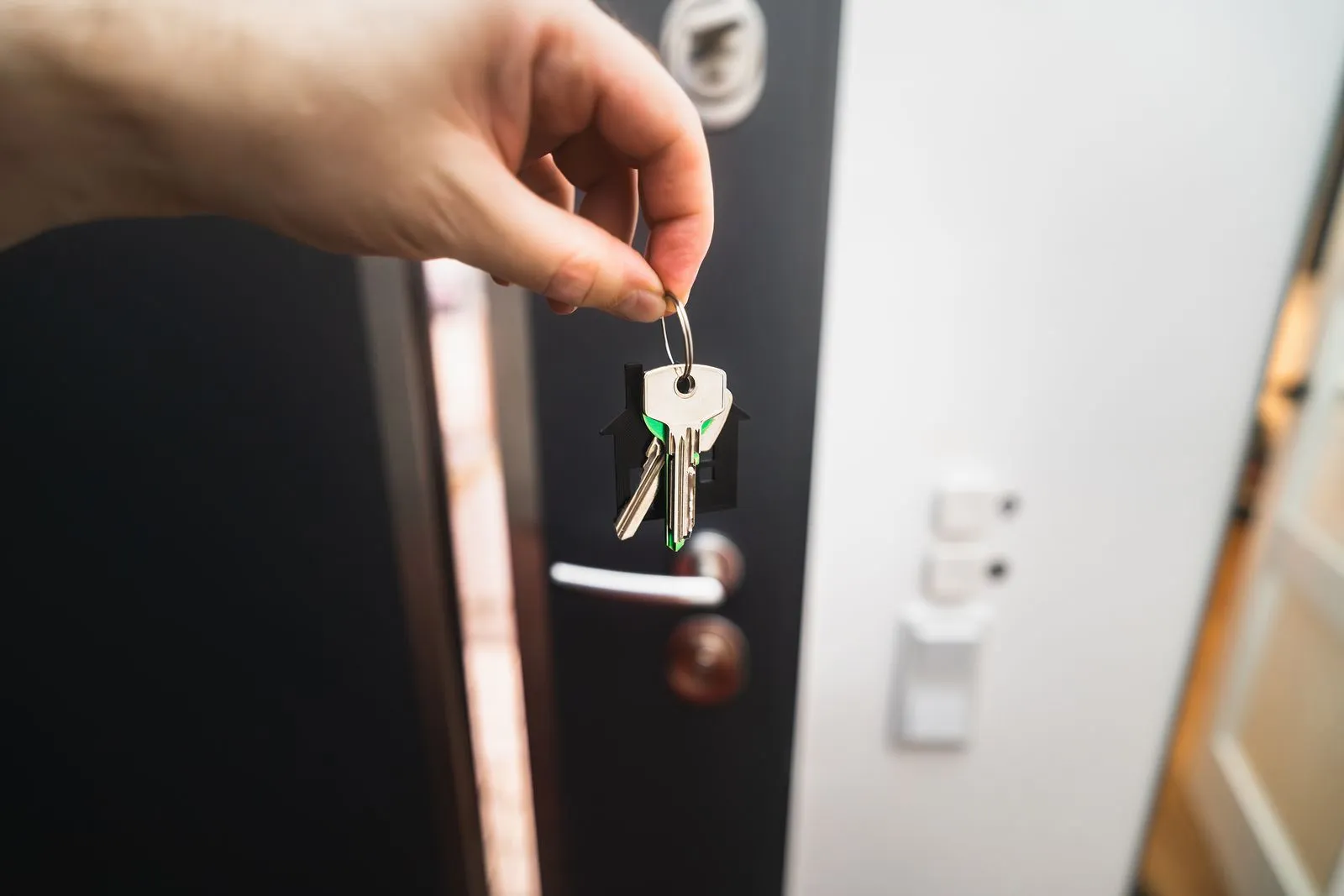
A secure door is a team effort: the lock, strike plate, frame, and your daily habits all matter. A sturdy deadbolt can still fall short if its screws barely reach the framing, while a strong frame won’t help if you regularly leave the door unlocked. A quick inspection can reveal easy fixes and show when a repair or upgrade makes sense. Use this checklist to strengthen the entry points you rely on every day.
Check the Deadbolt
Lock and unlock the deadbolt from both sides, if it has an interior keyway, and check that the bolt moves smoothly without forcing the key or turning the thumb turn. When extended, the bolt should enter the strike plate cleanly. If it sticks, first check whether the door sags or presses against the frame; misalignment can make a sound lock frustrating and less reliable.
Look for a deadbolt that extends at least one inch into the door frame. Check that the exterior cylinder sits firmly against the door and that the interior hardware does not wobble. If you replace the lock, choose a model designed for exterior doors and follow its installation instructions. A locksmith can assess compatibility if the door is unusually thick or the existing holes do not fit.
Strengthen the Strike Plate
The strike plate is the metal fitting on the frame that receives the deadbolt. Check for loose screws, cracked wood, or a plate that shifts when you move the locked door. A small plate held by short screws may anchor only to the trim, rather than the stronger framing behind it.
Use the strike plate and screw sizes recommended for your lock and door. Where the installation allows, longer screws that reach the wall framing can help secure the plate more firmly. Keep the bolt aligned with the opening so it does not bind. If the screw holes are stripped or the frame is split, repair the wood before relying on the plate.
Inspect the Door and Frame
Examine the door for cracks, soft spots, loose panels, and damage around the lock. Check the frame on the lock side, especially near the deadbolt and latch. The trim around a door is not the same as the structural frame, so a door can look finished while the wood that holds the lock is damaged or weak.
Open and close the door slowly. It should sit squarely in the frame, and the latch and deadbolt should line up without lifting, pushing, or pulling the door. Tighten loose hinges and address sagging or gaps that interfere with the locks. For a hollow or damaged door, ask a qualified professional whether repair or replacement is the better option.
Build Reliable Locking Habits
Make locking the deadbolt part of your routine whenever you leave and before you go to bed. Don’t assume the door is secure just because it has closed; confirm that the bolt is fully extended. Ask household members to follow the same routine, and agree on how to check the door without leaving it partially open.
Keep spare keys with a trusted person rather than under a mat, in a planter, or near the entrance. If you move into a new home or lose a key, consider rekeying the locks. When a door has glass nearby, avoid leaving keys where someone could reach them through a broken pane. Review these habits regularly, especially after a household or access change.
Start with the door you use most: test its deadbolt, inspect the strike plate and frame, and make a consistent locking routine. Fix sticking or loose hardware instead of working around it. If you’re unsure whether the lock or frame is properly installed, Bright Key Locksmith can help assess your door security.